For over a century, the optical industry treated pediatric nearsightedness as a minor inconvenience. A child’s vision worsened, the doctor prescribed stronger single-vision lenses, and the cycle repeated annually. In 2026, the global consensus has aggressively shifted. Pediatric myopia is no longer just a refractive error; it is an epidemic disease. And simply updating a prescription is no longer an acceptable standard of care.
The Pathology of Axial Elongation
The problem with traditional single-vision lenses is that they only correct central vision. They push the peripheral light rays behind the retina (hyperopic defocus), which biologically signals the eyeball to grow longer to catch up to the light. This physical stretching of the eye, known as axial elongation, drastically thins the retinal tissue.
Every diopter of myopia increases the lifelong risk of retinal detachment, myopic maculopathy, and glaucoma. By the time a child reaches -5.00D or -6.00D, the tissue damage is permanent. The goal of modern optometry is not just to help the child see the whiteboard today, but to physically stop the eye from growing too long.
“We are no longer just correcting vision. We are changing the physical trajectory of how a child’s eye grows.”
The Four Pillars of Myopia Control
Top-tier Canadian practices in 2026 have built entire specialty clinics dedicated to Myopia Management, offering a tiered system of medical interventions.
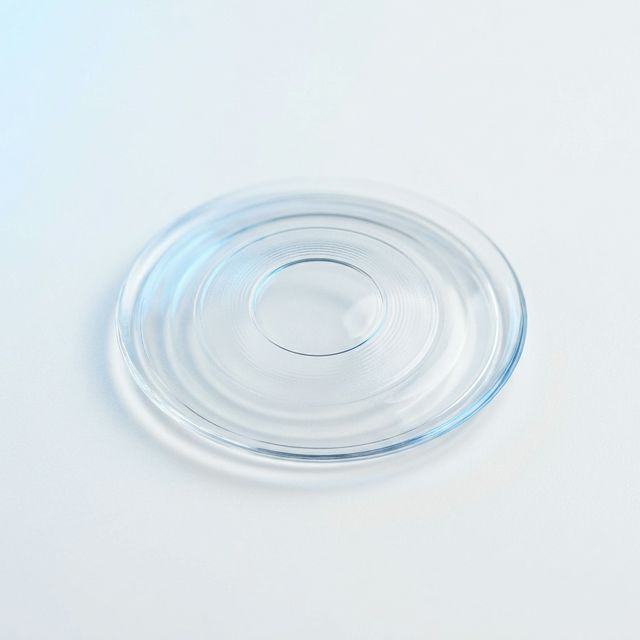
- Peripheral Defocus Contact Lenses (e.g., MiSight 1 day): These dual-focus daily disposables correct central vision while creating myopic defocus in the periphery, signaling the eye to stop growing. They are FDA and Health Canada approved to slow progression in children.
- Orthokeratology (Ortho-K): Rigid gas-permeable lenses worn only while sleeping. They gently reshape the cornea overnight, providing perfect uncorrected daytime vision while simultaneously creating the precise peripheral optical profile needed to halt axial growth.
- Specialized Spectacle Lenses: Utilizing D.I.M.S (Defocus Incorporated Multiple Segments) technology, lenses like Hoya MiYOSMART offer a non-invasive option for younger children not yet ready for contact lenses.
- Pharmacological (Low-Dose Atropine): A nightly drop of highly diluted Atropine (typically 0.01% to 0.05%) that biochemically inhibits scleral growth without severely paralyzing focusing ability or dilating the pupil.
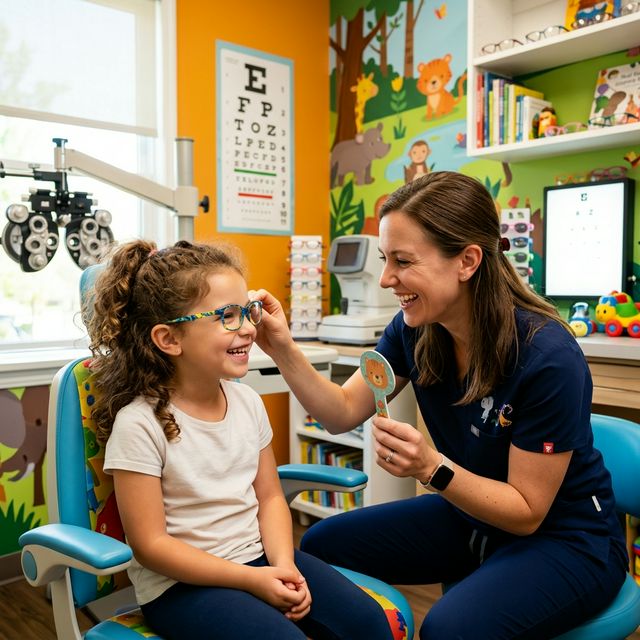
The most critical piece of equipment in a 2026 myopia clinic isn’t the phoropter; it’s the optical biometer, which precisely tracks the physical length of the eyeball.
The Business of Medical Management
Integrating myopia management transforms a practice from a retail-driven business to a medical-driven annuity. Myopia management is not billed as a pair of glasses; it is billed as an annual medical program.
Parents gladly pay a premium out-of-pocket global fee (often ranging from $1,000 to $2,500 annually, depending on the modality) to protect their children from permanent vision loss. Because the child relies on the practice for ongoing supply, biometry measurements, and topography, the retention rate for a myopia management patient approaches 98%.
How to Communicate with Parents
The biggest hurdle in myopia control is parent education. The doctor must gracefully shift the parent’s mindset. The script must change from: “Emma’s eyes got a little worse, but she’ll see fine with these new glasses.”
To the 2026 standard: “Emma’s eyeball is physically growing too long, which increases her lifelong risk of eye disease. I am placing her on a medical myopia management plan to physically slow this growth down. Our coordinator will go over the Ortho-K and MiSight options with you.”
Key Takeaways
- Single-vision lenses contribute to axial elongation; they do not control myopia.
- Axial length measurement via optical biometry is the new gold standard of pediatric testing.
- Offer a tiered system: Atropine, Ortho-K, peripheral defocus contacts, and targeted spectacles.
- Transition from selling “a pair of glasses” to enrolling patients in an “annual global fee medical program.”
Frequently Asked Questions
Can you completely stop a child’s myopia from progressing?
While we cannot guarantee an absolute halt to progression, clinical studies show that interventions like Ortho-K and MiSight can slow down the rate of progression by 50% to 60% compared to standard single-vision lenses, drastically reducing the final prescription.
Is Orthokeratology safe for kids?
Yes. Ortho-K has been used safely for decades. When prescribed by a certified specialist and matched with rigorous hygiene protocols supervised by parents, the risk of infection is comparable to standard overnight contact lens wear.
Are kids responsible enough to wear daily contacts like MiSight?
Absolutely. Studies routinely show that children as young as 8 can successfully manage daily disposable contact lenses with proper training. Daily disposables are also the most hygienic modality, as they require no cleaning or storage.