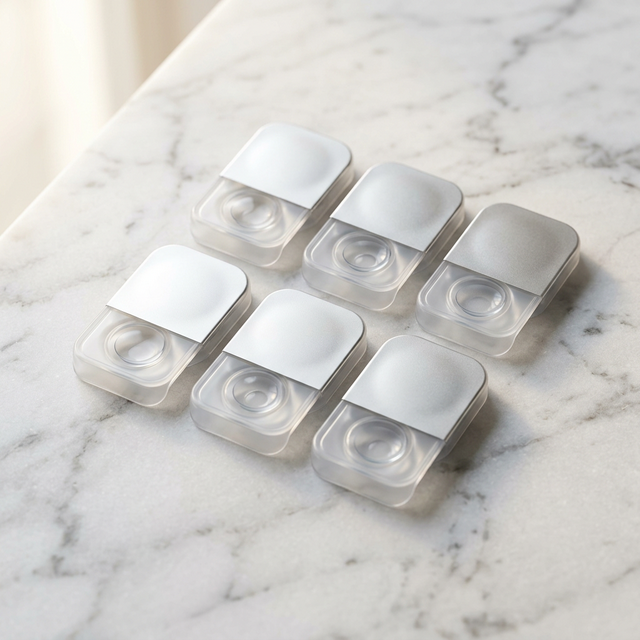
In the rapidly evolving landscape of Canadian eyecare, the conversation surrounding contact lenses has fundamentally shifted. We are no longer debating whether soft daily disposables are superior; the clinical data has long settled that argument. The question for 2026 is: how are you positioning them?
The Eradication of “Convenience”
For over a decade, the optical industry sold daily disposables using a flawed primary value proposition: convenience. “You don’t have to clean them,” we told patients. While true, pitching a medical device purely on convenience immediately commoditizes it. It invites the patient to weigh the financial cost of the lens against the sheer laziness of using contact lens solution.
The most successful, high-revenue specialty practices in 2026 never use the word convenience. Instead, they position premium silicone hydrogel daily disposables as a non-negotiable pillar of ocular surface health.
“When you prescribe a daily disposable, you are not prescribing a piece of plastic. You are prescribing a sterile environment every single morning.”
The Clinical Reality of Bio-Burden
Modern diagnostic imaging, particularly advanced anterior segment OCT and tear film analysis, has made the microscopic visible. We can now show patients exactly what a 14-day or 30-day lens looks like on day 20. The lipid deposits, the protein bio-fouling, and the microscopic bacterial biofilms are no longer abstract concepts—they are visual realities.
By shifting the narrative toward hygiene, Giant Papillary Conjunctivitis (GPC) prevention, and allergy mitigation—especially crucial during the volatile Canadian spring—the price objection melts away. You are no longer asking the patient to pay an extra $300 a year for convenience; you are asking them to invest in the long-term biological safety of their corneas.
The Annual Supply Strategy
Retaining your contact lens patients against aggressive online retailers requires frictionless economics.
- The Subscripton Model: Transitioning patients from “buying boxes” to “managing subscriptions.”
- Direct-to-Patient Shipping: 90% of daily wearers in top clinics never carry a box out of the store. The annual supply is shipped directly to their home.
- Rebate Automation: Premium practices do not hand patients a paper rebate form. They process the manufacturer rebate on the patient’s behalf at the point of sale, providing instant gratification.

Premium positioning requires the optometrist to actively prescribe the modality, rather than asking the patient what they prefer.
The Optometrist’s Handoff
The success of the daily disposable conversion relies entirely on the authority of the chair. If the doctor asks, “Would you like to stick with your monthly lenses or try dailies?” the battle is lost.
The 2026 gold standard script sounds like this: “John, based on the slight inflammation I’m seeing under your eyelids, and to protect your tear film as your screen time increases, I am prescribing a premium daily lens. It ensures a sterile surface touches your eye every morning. I’ll have the optician finalize your annual supply.”
Key Takeaways
- Stop selling “convenience” and start prescribing “ocular hygiene.”
- Use diagnostic imaging to visually demonstrate bio-fouling on monthly lenses.
- Automate the financial friction: ship direct-to-home and process rebates instantly.
- The doctor must prescribe the modality, not ask for the patient’s preference.
Frequently Asked Questions
Why are daily disposables better for spring allergies?
Daily disposables prevent the accumulation of airborne pollen and allergens on the lens matrix. By throwing the lens away every night, the patient starts with an allergen-free, sterile surface every morning, drastically reducing histamine responses and red eyes.
Are daily contact lenses worse for the environment?
While this is a common patient concern, major manufacturers now offer robust recycling programs (like Bausch + Lomb’s EVERY CONTACT COUNTS). Furthermore, the environmental cost of manufacturing, shipping, and disposing of plastic solution bottles and cases often offsets the footprint of the blister packs.
How do I combat the price objection of daily lenses?
Compare the cost comprehensively. When you factor in the cost of premium cleaning solutions, replacement cases, and the value of time, the financial gap between monthlies and dailies narrows significantly. Frame the remaining difference as an investment in medical safety.